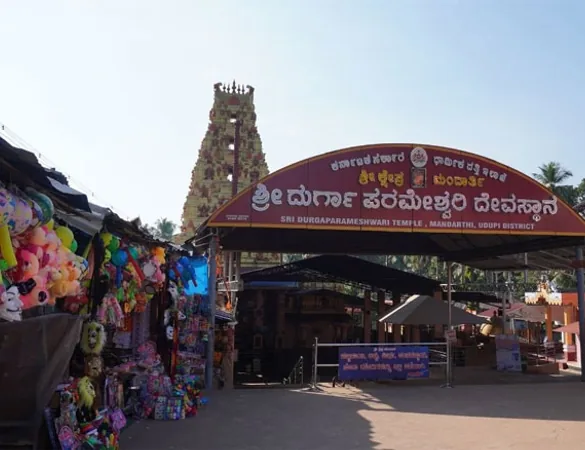
Sri Durgaparameshwari
Here a vow is repaid in theatre. Devotees promise a night of Yakshagana, and the troupe performs it.
Speciality
The link between a temple and a performance tradition is usually historical. At Mandarthi it is still a live transaction.
- Founded
- Not established
- Deity
- Durgaparameshwari
- Tradition
- Shakta
Don’t miss
A harake seva night
If a performance is scheduled, this is the reason to come. It is an all-night form, and leaving at the interval misses the point.
Badagutittu style
Udupi district’s northern style, distinct from the Tenkutittu of Dakshina Kannada in costume, drumming and footwork.
The season
Performance life winds down at Pattanaje, around mid-May, and resumes after the monsoon.
Near this place
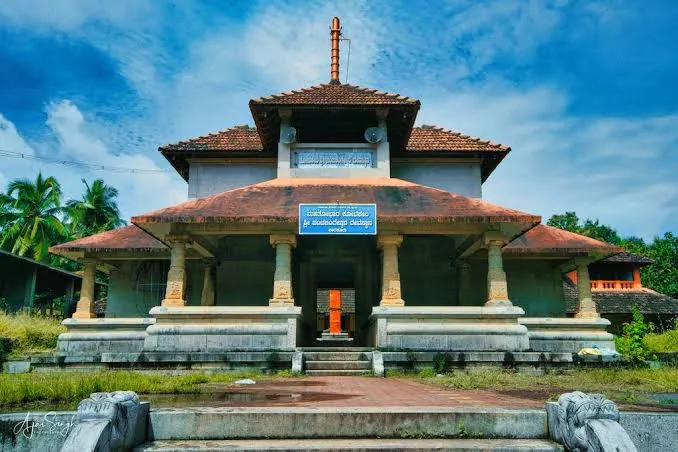 Panchalingeshwara
Temple, 13 km away
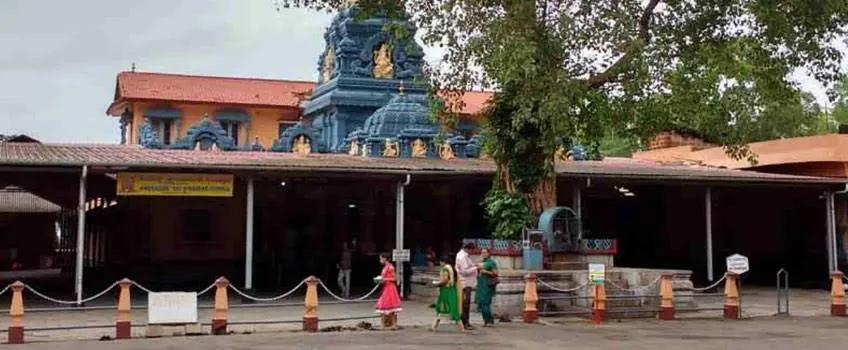 Anegudde Sri Vinayaka
Temple, 21 km away
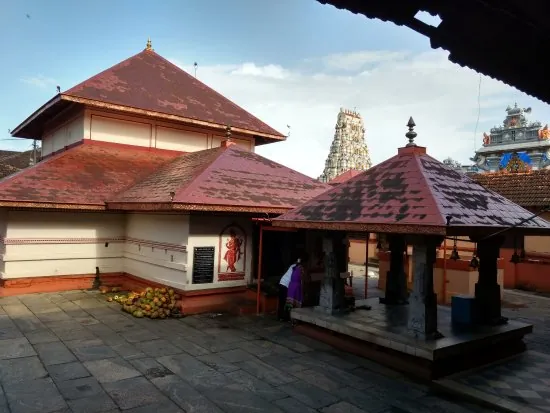 Sri Chandramouleshwara
Temple, 21 km away
History
Mandarthi lies about twenty-five kilometres north of Udupi. The name is usually explained as Manda-Aarathi, the holy light, though a separate local account traces it to a snake that reached this stretch of forest.
The founding story involves the sage Sudeva and a royal couple who are said to have prayed to Durga, with the goddess promising to manifest here as Durgaparameshwari. As with most origin accounts on this coast, it is carried by devotional and heritage sites rather than by scholarship.
What distinguishes Mandarthi is its harake seva, a vow repaid through service. Here the service is Yakshagana. A devotee whose wish is granted undertakes to sponsor a night of the all-night dance-drama, and a troupe performs it. The temple is one of the best-known centres for this in the region, and it means the relationship between the shrine and the art form is not a matter of heritage but of booking.
Yakshagana on this coast runs in two styles: Badagutittu in Udupi district and Tenkutittu in Dakshina Kannada. The performance season broadly follows the Tulu calendar, running from after the monsoon until Pattanaje around mid-May.
One further detail from the temple’s own history: when the hereditary priestly family died out, the king of Barkur is said to have brought a Tulu Brahmin family from Alevoor to continue the worship.
Plan your visit
- Where
- Mandarthi
- District
- Udupi
- From you
- Not shared
Good to know
- Anna Prasadam
- Not yet verified. Please ask locally.
- Dress code
- Not yet verified. Please ask locally.
- Photography
- Not yet verified. Please ask locally.
Poojas and timings
Not yet verified. We publish a schedule only after confirming it with the temple office. Schedules on this coast change on festival days, and a wrong one can cost a family a long drive, so please check locally before you travel.
Best time to visit
The performance season is the reason to time a visit: broadly after the monsoon through to Pattanaje in mid-May. Aati, around July and August, is the quiet month.
Get directions in Google MapsSources
- Mandarthi DurgaparameshwariMangalore Heritage
- PattanajeWikipedia
Most English-language writing on these places is travel and devotional material that repeats itself. Where sources disagree we say so, and where something is tradition rather than record we say that too.