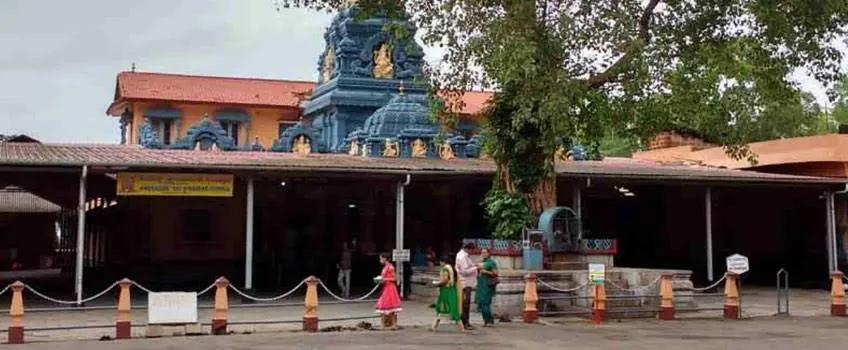
Anegudde Sri Vinayaka
The elephant hillock. One of the seven Mukti Sthalas, and you climb to it.
Speciality
Most temples on this coast sit low. This one makes you walk up, and the approach is the experience.
- Founded
- Not established
- Deity
- Vinayaka (Ganesha)
- Tradition
- Ganapatya
Don’t miss
The climb
The temple is on a hillock. Arrive on foot from below rather than parking at the top.
The Mukti Sthala circuit
Six other sites belong to the same group, including Shankaranarayana and Kumbhashi’s own Harihara associations.
The highway position
It sits directly on NH-66, which is why it is one of the most-visited temples in the district and still feels like a hill shrine.
Near this place
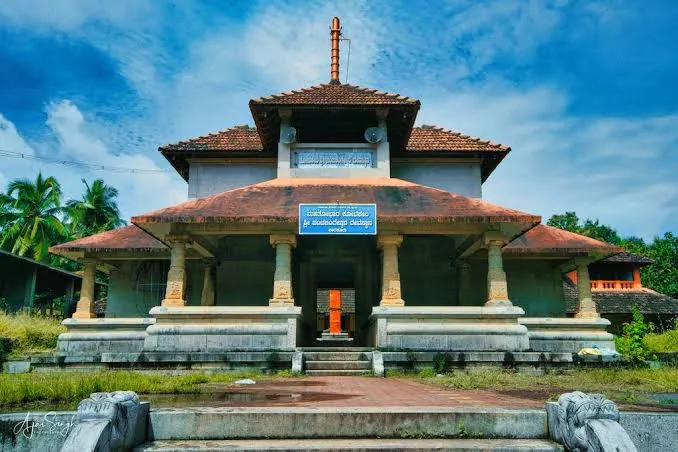 Panchalingeshwara
Temple, 15 km away
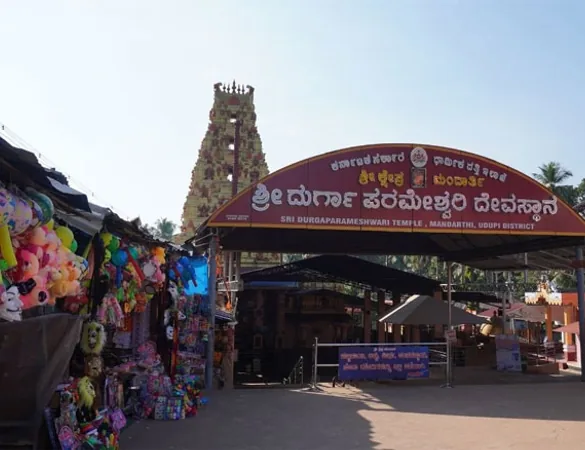 Sri Durgaparameshwari
Temple, 21 km away
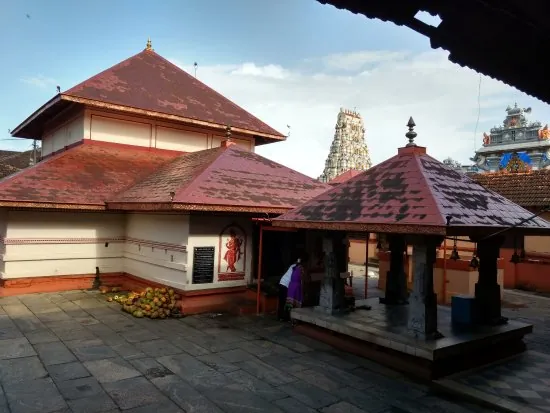 Sri Chandramouleshwara
Temple, 29 km away
History
Anegudde means elephant hillock, from the Kannada for elephant and hill, and the temple sits on a rise above the highway between Udupi and Kundapura. It is counted among the seven Mukti Sthalas of coastal Karnataka, the group of sites associated with Parashurama.
The village’s other name, Kumbashi, is usually traced to the demon Kumbhasura, said to have been killed here by Bheemasena during the Pandavas’ exile. A separate tradition credits the sage Agastya, who is said to have performed penance here during a drought to appease Varuna. Both are tradition, not chronology, and the sources that carry them are devotional rather than historical.
A third account describes the site as Harihara Kshetra, from an older installation of images of both Vishnu and Shiva attributed to Parashurama. The layering is the interesting part: a Ganesha temple carrying Shaiva, Vaishnava and Pandava stories at once is normal on this coast, and it tells you more about how these places accumulate meaning than any single legend does.
One travel source reports five footprints in front of the temple under archaeological protection. We have not been able to confirm that independently.
Plan your visit
- Where
- Kumbashi, on NH-66
- District
- Udupi
- From you
- Not shared
Good to know
- Anna Prasadam
- Not yet verified. Please ask locally.
- Dress code
- Not yet verified. Please ask locally.
- Photography
- Not yet verified. Please ask locally.
Poojas and timings
Not yet verified. We publish a schedule only after confirming it with the temple office. Schedules on this coast change on festival days, and a wrong one can cost a family a long drive, so please check locally before you travel.
Best time to visit
Ganesh Chaturthi, usually late August or September, is the obvious time and also the most crowded. The climb is unpleasant in heavy monsoon.
Get directions in Google MapsSources
- Anegudde Sri Vinayaka Devasthanaofficial history
- KumbashiWikipedia
Most English-language writing on these places is travel and devotional material that repeats itself. Where sources disagree we say so, and where something is tradition rather than record we say that too.