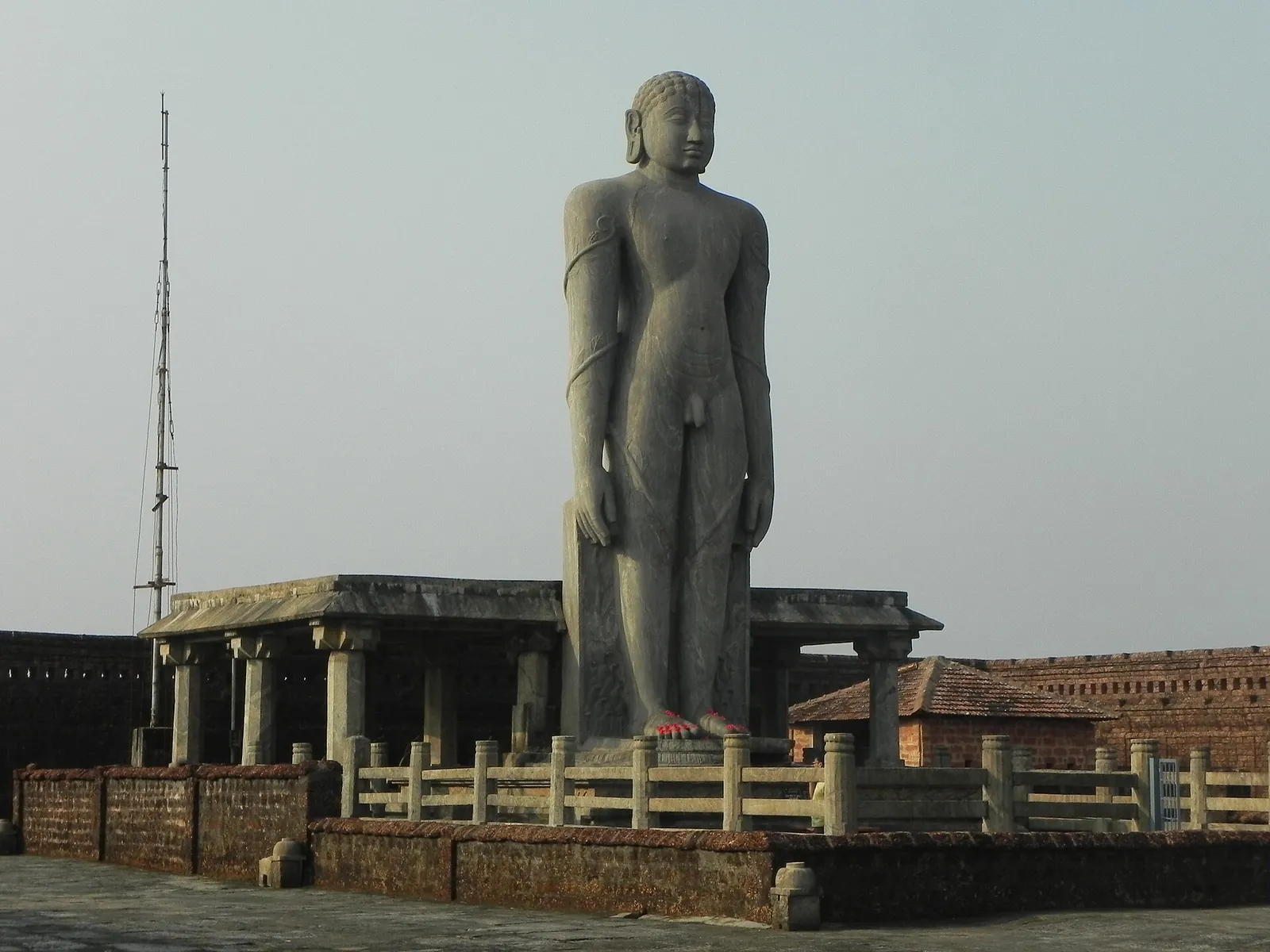
Gommateshwara, Karkala
Forty-two feet of a single stone, raised in 1432, standing on a rock above the town.
Speciality
One of the few places on this coast where the date, the patron and the adviser are all on record.
- Founded
- 1432 CE
- Deity
- Bahubali
- Tradition
- Jain
Don’t miss
Chaturmukha Basadi
Four faces, four entrances, directly facing the monolith. The pairing is the point.
The rock itself
The statue stands on bare rock above the town. The approach is a climb and the view is the reward.
Varanga’s Kere Basadi
A Jain temple in the middle of a lake, reached by boat. Near enough to add to the same day.
Near this place
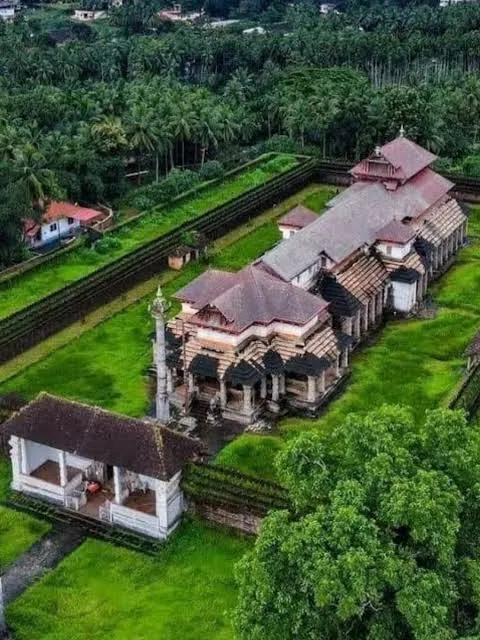 Saavira Kambada Basadi
Basadi, 16 km away
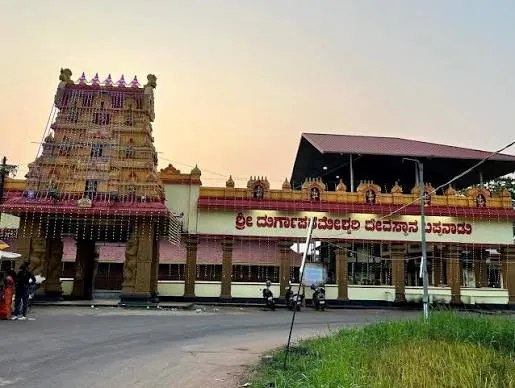 Bappanadu Durgaparameshwari
Temple, 26 km away
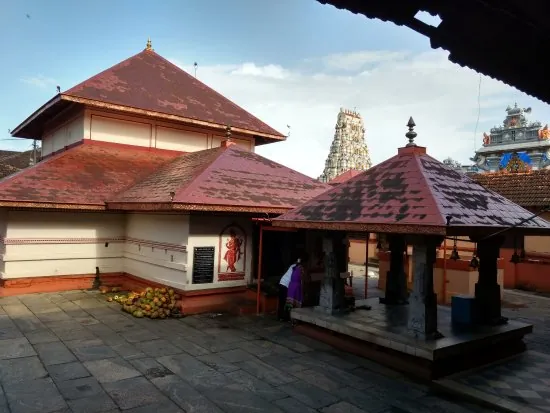 Sri Chandramouleshwara
Temple, 31 km away
History
The monolith was raised in 1432 by Veera Pandya Bhairarasa Wodeyar of the Santara dynasty, on the advice of Lalitakirti, the Bhattaraka of the Karkala Jain Matha. It stands about forty-two feet and is the second tallest such figure in Karnataka. One list gives 1430 instead; 1432 is the figure most sources carry.
Facing it is the Chaturmukha Basadi, the four-faced temple with four entrances and a central sanctum. Its date is genuinely contested: some sources give 1432, matching the statue, while others place it in 1586 under Immadi Bhairarasa Vodeya. The later date is the more commonly cited.
Karkala belongs to a Jain landscape that most itineraries of this coast omit entirely. Moodabidri, an hour south in Dakshina Kannada, is called the Jain Varanasi of the south. Varanga, nearby, has the Kere Basadi standing in the middle of a lake. Venur has a third Bahubali monolith of 1604. Taken together they are as much a part of this region’s religious history as any temple, and they are a different tradition with different conventions, which is why this entry is labelled a basadi and not a temple.
Plan your visit
- Where
- Karkala
- District
- Udupi
- From you
- Not shared
Good to know
- Anna Prasadam
- Not yet verified. Please ask locally.
- Dress code
- Not yet verified. Please ask locally.
- Photography
- Not yet verified. Please ask locally.
Poojas and timings
Not yet verified. We publish a schedule only after confirming it with the temple office. Schedules on this coast change on festival days, and a wrong one can cost a family a long drive, so please check locally before you travel.
Best time to visit
The climb to the monolith is over exposed rock, so go early or late in the day, and not in heavy rain.
Get directions in Google MapsSources
- Gommateshwara statue, KarkalaWikipedia
- Chaturmukha Basadi, KarkalaWikipedia
Most English-language writing on these places is travel and devotional material that repeats itself. Where sources disagree we say so, and where something is tradition rather than record we say that too.